Drain snake
A cable clears soft blockages — grease, hair, soap — in branch lines and main lines. It is the usual first step and the right tool for most single-fixture clogs.
A drain that keeps backing up usually has a cause beyond the clog itself — grease, mineral scale from hard water, or roots from a live oak or cedar. Lake Travis Plumbing provides drain cleaning in Spicewood and finds the cause when the clog keeps coming back. Call (254) 822-6941, Monday to Friday, 9 AM to 5 PM.

Three things clog drains around Lake Travis more than anything else: grease that cools and sets in the line, mineral scale from hard water that narrows the pipe year by year, and roots from live oaks and cedars that find the smallest joint in a sewer lateral. A kitchen sink that drains slowly is usually grease. A tub or shower that keeps backing up is often scale or hair. A whole house that backs up at the lowest drain is usually a main line problem — and that is where roots come in.
The first question we ask is where the clog is: in the house line, in the line running out to a septic tank, or in the tank itself. That matters, because the fix is different in each case — and because septic pumping, drain-field work and new septic systems are a septic provider's job, not a plumber's. We do the house lines and the line to the tank, and we tell you plainly when the job belongs to a septic provider. Our guide to why a drain keeps clogging after cleaning covers the same question.
Clearing the clog is the first half of the job. The second half is finding out whether it will be back next month.
A cable clears soft blockages — grease, hair, soap — in branch lines and main lines. It is the usual first step and the right tool for most single-fixture clogs.
High-pressure water scours the inside of a pipe, clearing grease and scale a snake leaves behind. It suits main lines and lines that clog again soon after snaking.
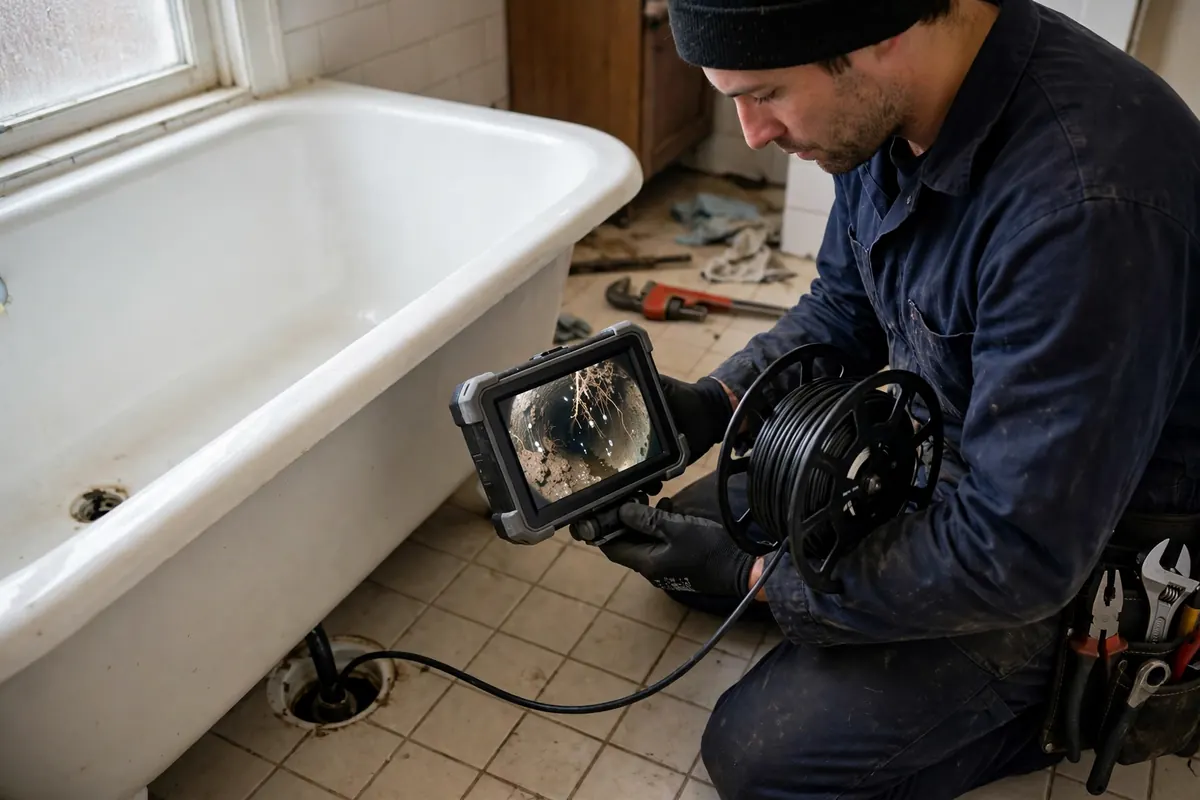
When a line keeps backing up, a camera shows the inside of the pipe: roots, scale, a break, or a low spot holding water. The footage decides the repair.
On a septic system, the first question is where the clog sits. House lines and the line to the tank are plumbing work; the tank and drain field belong to a septic provider, and we say so.
Chemical drain cleaners do not clear a main line and can damage pipes and septic systems. Grease belongs in the bin, not the sink — it is the most common clog we clear.
Call (254) 822-6941, Monday to Friday, 9 AM to 5 PM. Tell us which fixtures are affected, whether it is one drain or the whole house, and whether the home is on septic.
One slow fixture points to its own branch. Several fixtures, or a backup at the lowest drain, points to the main line. On septic, we also ask about the line to the tank.
A snake clears most clogs. Where scale or grease coats the pipe, hydro jetting scours it clean. The method is chosen for the clog, not the other way round.
If the line has backed up before, we run a camera through it to see whether roots, scale or a break is behind the repeat clog.
You get a description of the clog and the state of the line, and a note of anything that belongs to a septic provider rather than to us.
Call (254) 822-6941, Monday to Friday, 9 AM to 5 PM. Tell us which fixtures are affected, whether it is one drain or the whole house, and whether the home is on septic.
Clears grease, hair and soap blockages in branch lines and main lines, and is the first tool on most clogs.
Scours grease and mineral scale from the inside of a pipe, and clears roots a snake cannot remove.
Shows the inside of a line so a repeat clog can be traced to roots, scale, a break or a low spot.
Cuts roots out of a sewer lateral so the line can be jetted and camera-checked afterwards.
Clears standing water from a backed-up tub or floor drain so the line can be worked on.
Used where a trap or a section of pipe has to come out to reach the blockage.
These are illustrative examples of the kinds of jobs this service covers, not records of specific completed jobs.
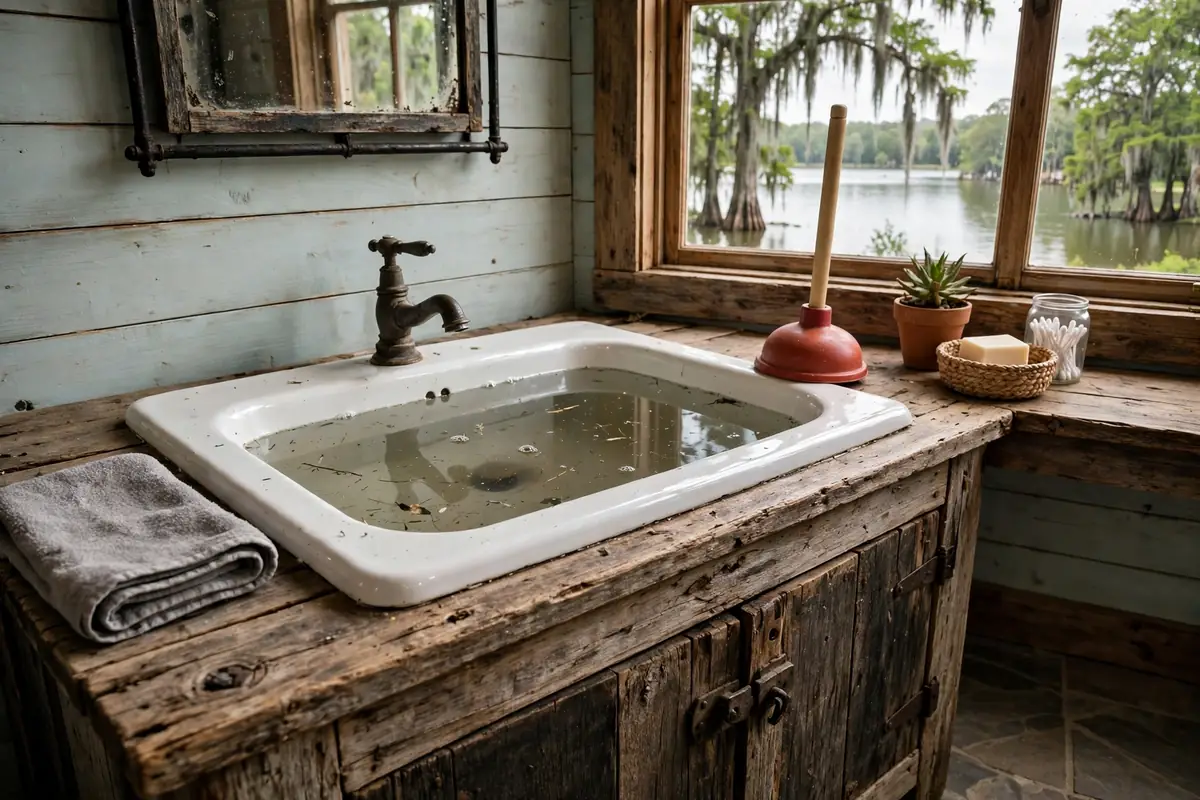
A bathroom sink that drains slower every week until it stands full after every wash is a common call. Soap and scale build up in the trap and the branch line over years of use.
What typically happens: the trap is cleared and the line snaked, then jetted to scour the scale off the pipe walls, and a camera check confirms the line is clean.
Book this service →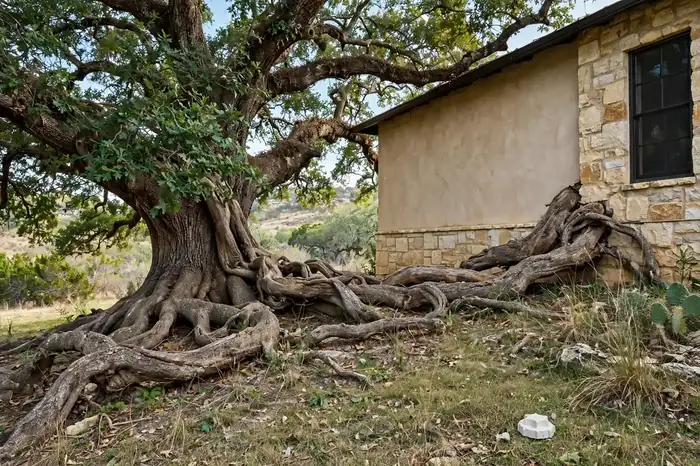
A home on acreage backs up at the lowest drain every few months. Snaking clears it each time, and it always comes back — the cause is usually roots from a live oak over the lateral.
What typically happens: the roots are cut out, the line is jetted, and a camera check shows where the joints are letting roots in.
Book this service →A home on septic can have a shower that backs up whenever the washing machine runs. The clog is not in the house — it is in the line running out to the tank.
What typically happens: the line to the tank is cleared and camera-checked. The tank itself is left to the septic provider, and the homeowner is told who to call.
Book this service →If more than one fixture is affected, or the lowest drain in the house is backing up, the problem is usually in the main line rather than a single trap.
Ask a pro →Grease is the usual cause. We clear the line and, where the pipe is coated, jet it so the grease does not set again straight away.
Hair and soap build up in the trap and the branch line. Cleared with a snake, and checked with a camera if it keeps returning.
A backup at the lowest drain means the main line is blocked — roots, scale or a break. Cleared, then camera-checked to find the cause.
On septic, the first question is where the clog is: house line, line to the tank, or the tank itself. We do the plumbing side and refer the septic side.
Our Google profile shows a 4.9-star rating from 16 reviews. We publish no review text on this page — the full reviews are on our Google profile, where they were written.
That is the first question on a septic home. One slow fixture means its own branch line. Several fixtures, or a backup at the lowest drain, means the main line or the line to the tank. A tank that is full or a drain field that is failing is septic work — a septic provider's job — and we tell you that rather than claiming it.
A snake clears a blockage; jetting scours the inside of the pipe. Jetting suits main lines coated in grease or hard-water scale, and lines that clog again soon after snaking. A snake is the right tool for most single-fixture clogs.
Because the clog was cleared but the cause was not: scale narrowing the pipe, roots coming in through a joint, or a low spot holding water. A camera check shows which one it is, and the repair follows what the camera shows.
No. Septic pumping, aerobic maintenance, drain-field repair and new septic installation are a septic provider's job. We clear house lines and the line to the tank, and we refer the rest.
Tell us which fixtures are affected and whether the home is on septic. Call Lake Travis Plumbing, Monday to Friday, 9 AM to 5 PM, on (254) 822-6941.
Call Now (254) 822-6941 →Call (254) 822-6941 for Drain Cleaning in Spicewood, Texas, Monday to Friday, 9 AM to 5 PM. Describe what you are seeing and we will explain the next step. If you would rather write it down first, use the form and we will call you back during open hours.