Pipe material check
We look at what the home is plumbed in — polybutylene, copper, galvanised — and where it has already failed. The material and the failure history decide whether a re-pipe is the right call.
Older Spicewood homes — especially pre-mid-1990s lake cottages — often still run on polybutylene or ageing copper that hard water has worn thin. When pinhole leaks keep coming back, repiping in Spicewood — a whole-home re-pipe in PEX — is the repair that ends the cycle. Call (254) 822-6941, Monday to Friday, 9 AM to 5 PM.
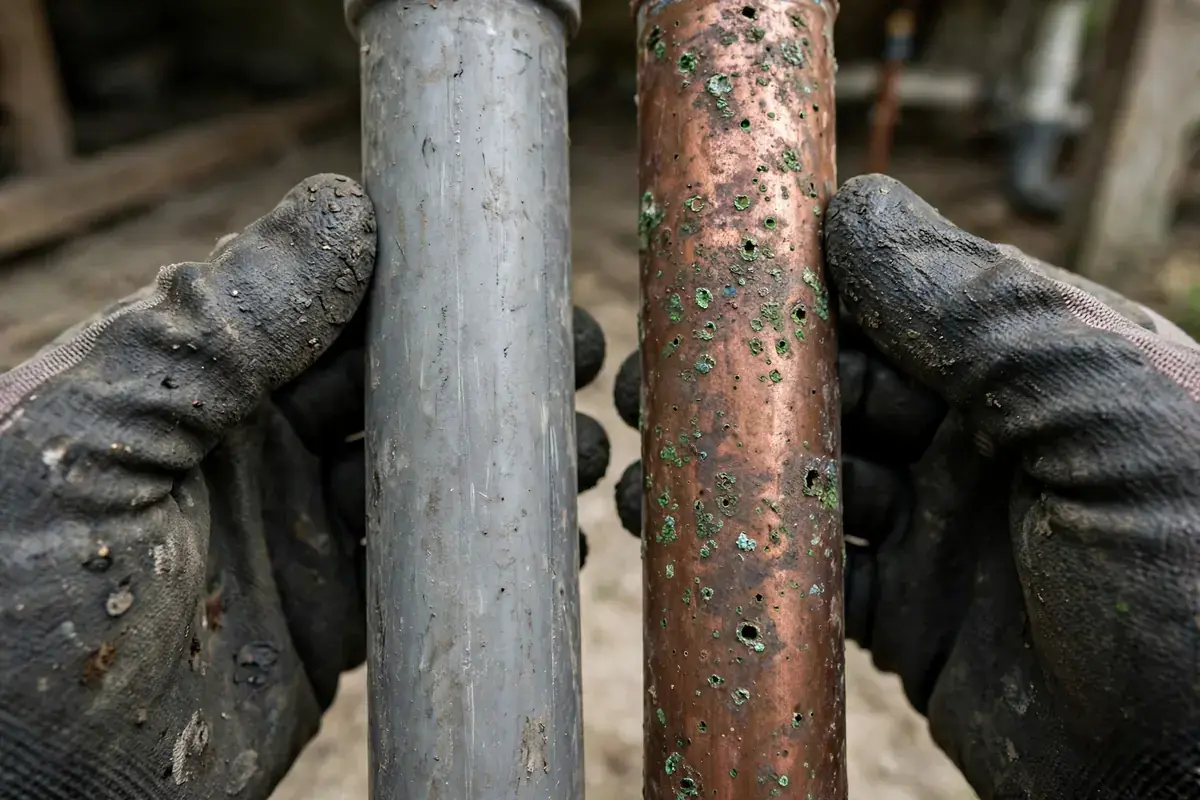
Polybutylene supply lines were common in homes built before the mid-1990s, and they are known to fail — fittings crack, lines split, and the failures come without much warning. Copper fares better, but hard water wears it from the inside, and pinhole leaks start appearing one after another. A home that has had two or three pinhole leaks is telling you the system is at the end of its life, not that one more patch will fix it.
PEX is the modern material for these conditions: it handles hard water better than copper, it flexes rather than splitting in a freeze, and it can be run through walls and attics with fewer joints. Buyers of older lake cottages should ask what the supply lines are made of before they buy — a plumbing inspection that includes the pipe material is cheap insurance. Our post on hard water in Spicewood explains what mineral scale does to pipes and heaters.
A re-pipe replaces the water supply lines through the house. The work is planned around the home — where the lines run, where the walls open, and how the water is kept on as much as the job allows.
We look at what the home is plumbed in — polybutylene, copper, galvanised — and where it has already failed. The material and the failure history decide whether a re-pipe is the right call.
PEX does not scale up the way copper does in hard water, and it flexes in a freeze rather than splitting. It is the usual choice for a whole-home re-pipe here.
A manifold gives each fixture its own run, so a problem at one tap does not mean shutting the whole house down. It suits homes where the layout allows it.
Lines are run through walls and attics with as little opening as the layout allows. Openings are kept small and the work area is left tidy.
Every new run is pressure-tested and every fixture run before the job is finished. The meter is checked with everything off to confirm nothing is leaking.
Call (254) 822-6941, Monday to Friday, 9 AM to 5 PM. Tell us the age of the home, what the pipes are made of if you know, and how many leaks you have had.
We walk the house looking at the visible pipe, the water heater, the shut-offs and where the lines run, and we talk through what a re-pipe would involve in your home.
New lines are planned fixture by fixture — where they run, where the walls open, and how the water stays on while the work goes on.
Old lines are taken out of service and new PEX runs are installed, jointed and clipped. Fixtures are reconnected as each run is finished.
The system is pressure-tested, every tap and toilet is run, and the meter is checked with everything off before we call the job done.

Call (254) 822-6941, Monday to Friday, 9 AM to 5 PM. Tell us the age of the home, what the pipes are made of if you know, and how many leaks you have had.
Flexible pipe in red and blue runs, with brass fittings, suited to hard-water conditions and to running through walls with fewer joints.
A central distribution point that gives each fixture its own run, so one tap can be shut off without stopping the house.
Makes clean, square cuts and tight crimped joints on PEX runs.
Confirms every new run holds pressure before the walls are closed up.
Checks inside walls and chases where a line has to be found before it is replaced.
Keeps openings small and leaves the work area tidy when a wall has to be opened.
These are illustrative examples of the kinds of jobs this service covers, not records of specific completed jobs.
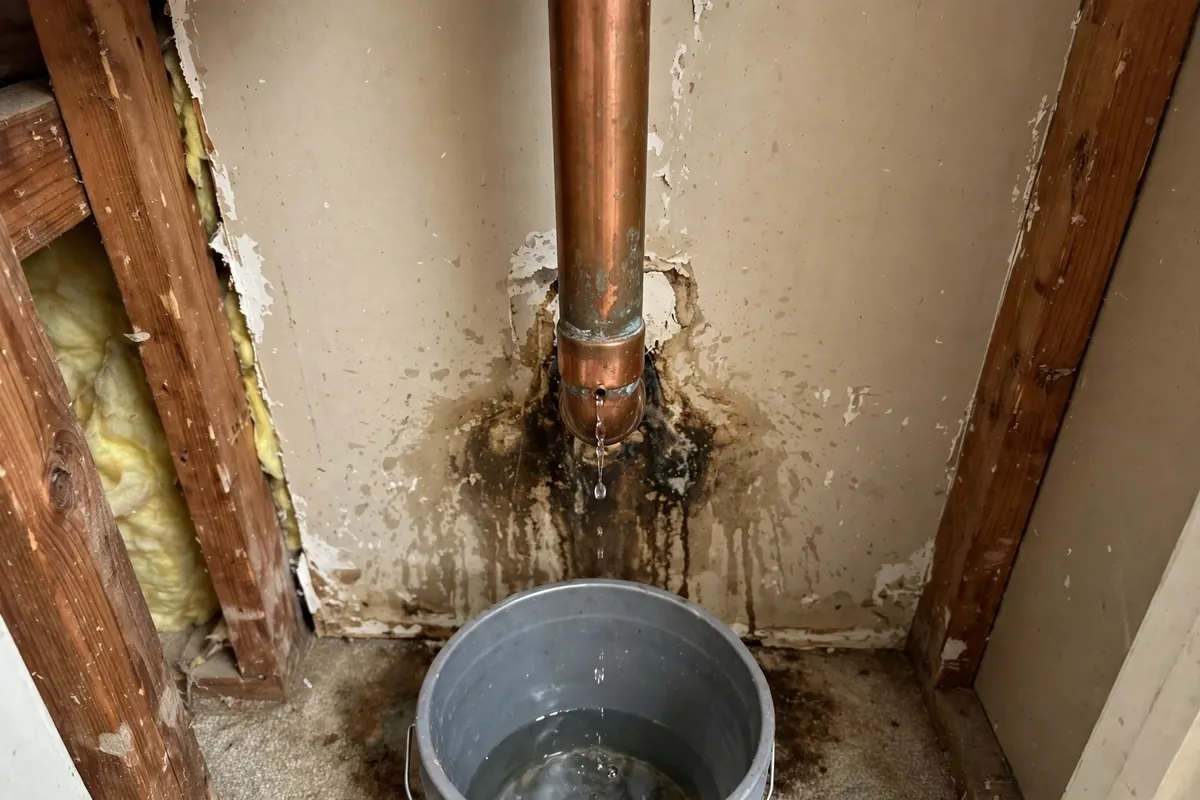
A 1990s home has three pinhole leaks in two years, each patched, each followed by another in a different room. The copper is wearing thin from hard water throughout the house.
What typically happens: the home is re-piped in PEX, fixture by fixture, and every run is pressure-tested. The patches stop because the old pipe is gone.
Book this service →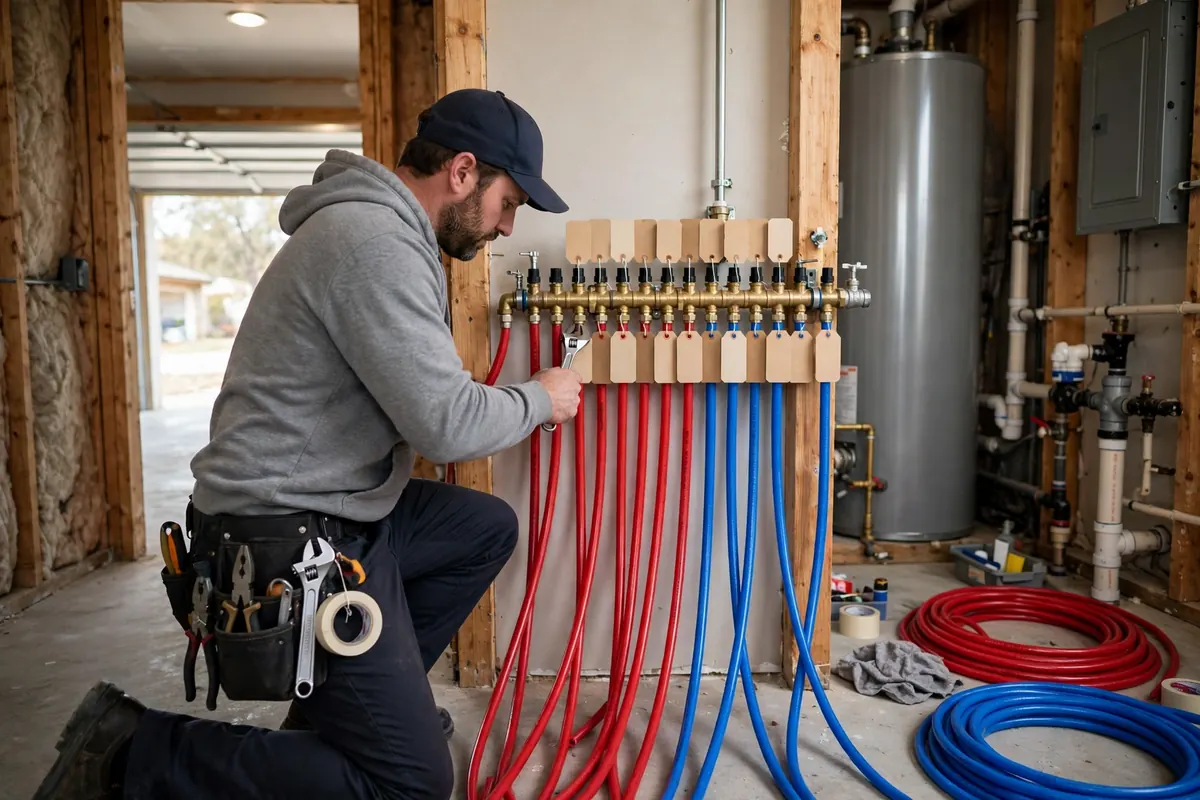
A larger hillside home with long pipe runs has pressure that drops whenever two taps run at once, and a history of leaks at the old manifold.
What typically happens: a new manifold with individual PEX runs to each fixture gives steady pressure at every tap, and one tap can be shut off without stopping the house.
Book this service →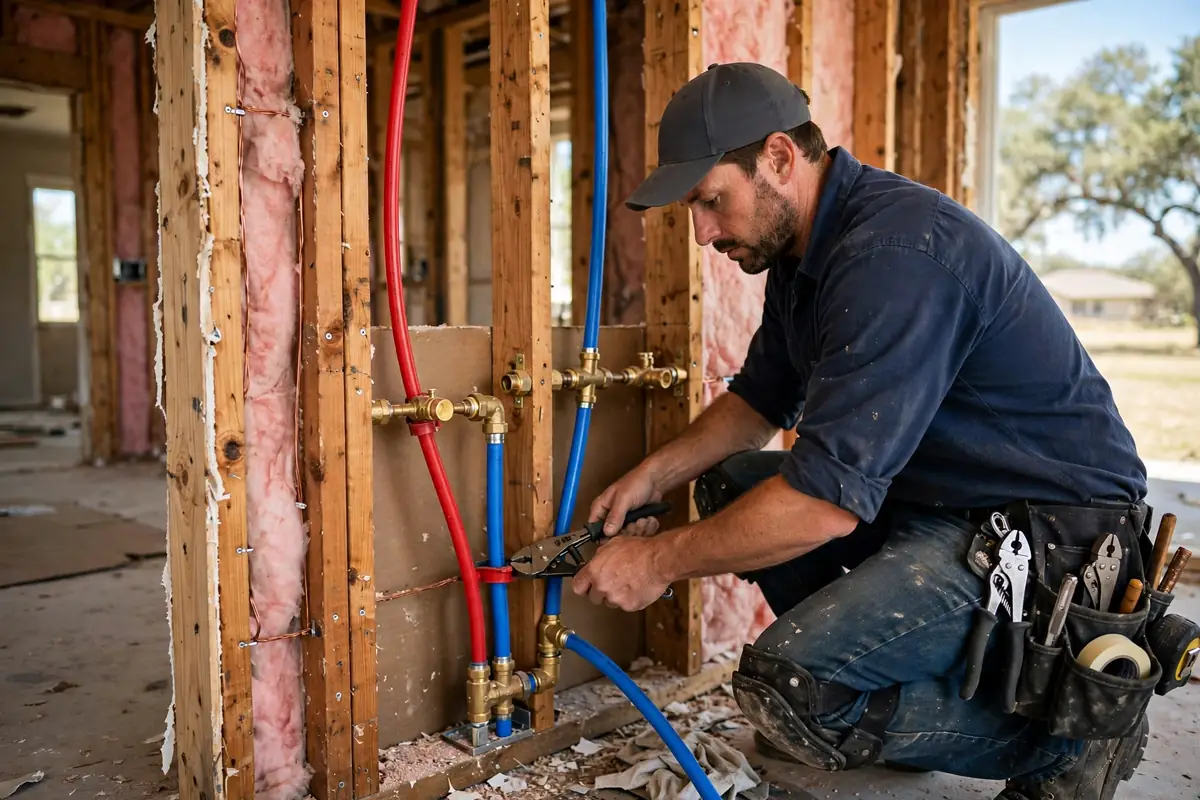
A home built before the mid-1990s can still run on polybutylene. A plumbing inspection before completing a purchase often finds the pipe material is the finding that matters.
What typically happens: the home is re-piped in PEX before the move-in, with new shut-offs at every fixture.
Book this service →One leak is a repair. A pattern of leaks is a system at the end of its life — and that is when a re-pipe is worth discussing.
Ask a pro →Grey plastic lines from before the mid-1990s are known to fail at fittings and along the pipe. A re-pipe replaces them before the next failure finds the floor.
Hard water wears copper from the inside. When pinholes appear in different rooms, the pipe is failing throughout, and patching one spot leaves the rest.
Scale narrowing old lines, or long runs in a larger home, can leave pressure short at the far taps. A re-pipe with properly sized runs restores it.
Ask what the supply lines are made of, how old the water heater is, and whether the sewer line has been camera-checked. The answers decide what the house will cost you after you buy it.
Our Google profile shows a 4.9-star rating from 16 reviews. We publish no review text on this page — the full reviews are on our Google profile, where they were written.
Look at the visible supply lines near the water heater or under sinks: polybutylene is usually grey plastic, sometimes blue or black, with plastic or metal fittings. Homes built before the mid-1990s are the ones that usually have it. If you are unsure, call us and we can look during a visit.
PEX handles hard water better than copper — it does not scale up the same way — and it flexes in a freeze rather than splitting. It also runs through walls and attics with fewer joints, which means fewer places to leak.
The old supply lines are taken out of service and new PEX runs are installed fixture by fixture, through walls or attics. Openings are kept as small as the layout allows, and every run is pressure-tested before the job is finished.
Ask what the supply lines are made of, how old the water heater is, whether the shut-off valves work, and whether the sewer line has been camera-checked. If the home is on a well and septic, ask for the well and septic records too.
If the pipe is failing in more than one place, a patch is not the answer. Call Lake Travis Plumbing, Monday to Friday, 9 AM to 5 PM, on (254) 822-6941 and tell us the age of the home.
Call Now (254) 822-6941 →Call (254) 822-6941 for Repiping Services in Spicewood, Texas, Monday to Friday, 9 AM to 5 PM. Describe what you are seeing and we will explain the next step. If you would rather write it down first, use the form and we will call you back during open hours.