Pump Diagnosis and Replacement
We test the pump’s draw and output and check the wiring and controls. A worn pump is replaced with one matched to the well’s depth and the household’s demand.
Many Spicewood homes draw from private wells in the Trinity aquifer, hundreds of feet down through limestone. When the pump cycles, the pressure swings, or the water stops, the fault is usually in the pump, the pressure tank, or the pressure switch — and the well house is the first thing to check after a freeze. We handle well pump repair in Spicewood, repairing and replacing well pumps and pressure equipment on the plumbing side of the well.
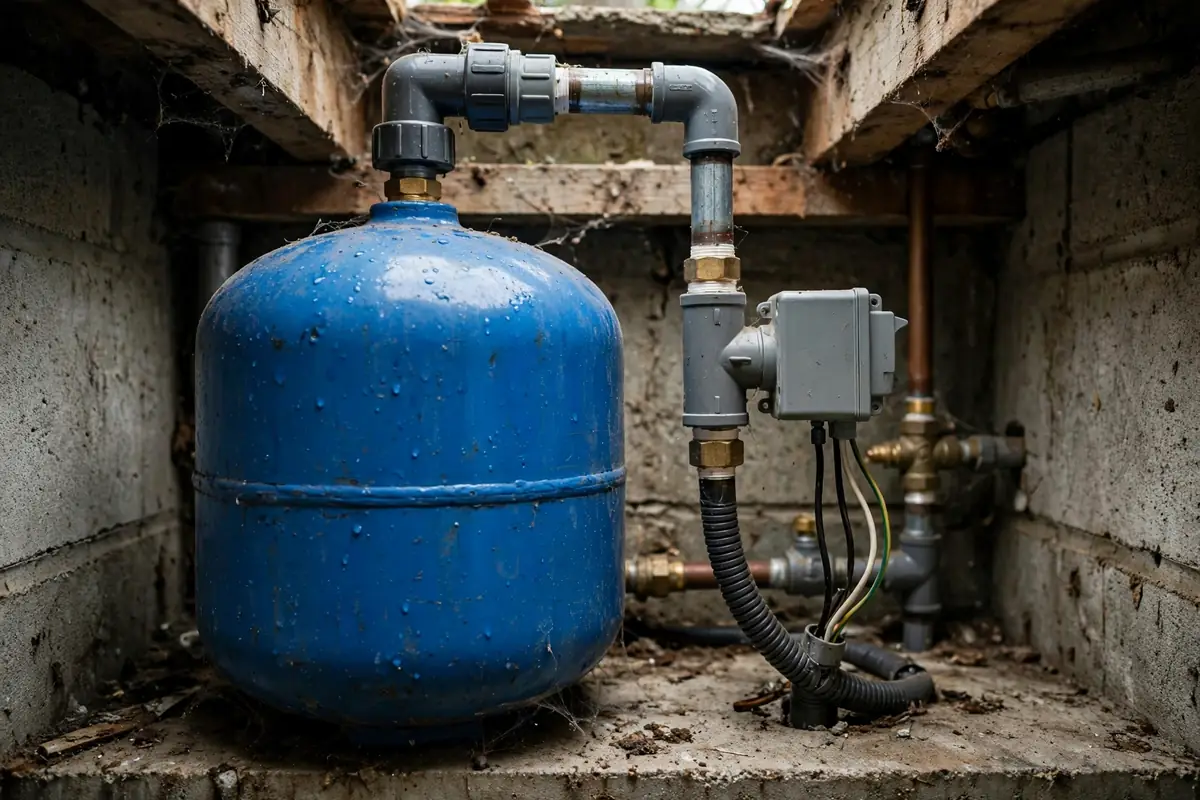
A well system is a pump deep in the bore, a pressure tank and pressure switch at the surface, and the piping between them. The pump lifts water, the tank stores pressure, and the switch tells the pump when to run. When any of the three falters, the house feels it as low pressure, pressure that surges and falls, air in the lines, or no water at all.
The boundary matters here. Drilling a new well is a driller’s job, regulated by the Texas Department of Licensing and Regulation — not a plumber’s. What we do is the plumbing side: the pump, tank, switch, and piping, and freeze protection for the well house and exposed equipment. Registration of a well depends on the parcel: Burnet County parcels fall under the Central Texas Groundwater Conservation District, and Travis County parcels under the Southwestern Travis County Groundwater Conservation District. For well problems and fixes, see our post on well water problems in Spicewood.
Well work starts with the symptoms and ends with steady pressure. Here is what a visit covers.
We test the pump’s draw and output and check the wiring and controls. A worn pump is replaced with one matched to the well’s depth and the household’s demand.
A waterlogged or failed tank makes the pump cycle constantly. We test the tank’s air charge and bladder, and replace the tank when it can no longer hold pressure.
The switch is the part that tells the pump when to run. We test it, clean or replace sticking contacts, and set the cut-in and cut-out pressures for the house.
Pressure that is too high, too low, or swinging is traced to its cause — tank, switch, pump, or a pressure-reducing valve (PRV) that is no longer doing its job. As a general guide, household pressure much above 80 psi is worth a look, but the fix is decided by testing, not by a single number.
Well houses and exposed pump equipment are among the first things to freeze in a Hill Country cold snap. We insulate exposed piping, check the well-house heat source, and fit protection where it is missing.
If the water itself is the problem — grit, iron, or smell — we test and talk through treatment. Treatment is fitted to what the water carries.
Cycling, low pressure, air in the lines, or no water at all — each points somewhere different. We ask when it started and what changed, including any recent freeze.
We check power, the pressure switch, the tank’s air charge, and the pump’s output in order, so the fault is found before any part is replaced.
A switch or a tank is often the fix. A worn pump is replaced with one matched to the well. We explain which it is before the work starts.
We set the tank charge and the switch pressures together — they have to match — and check the pressure at the taps around the house.
We check the well house and exposed equipment, insulate what is bare, and talk through what to watch for before the next cold snap.
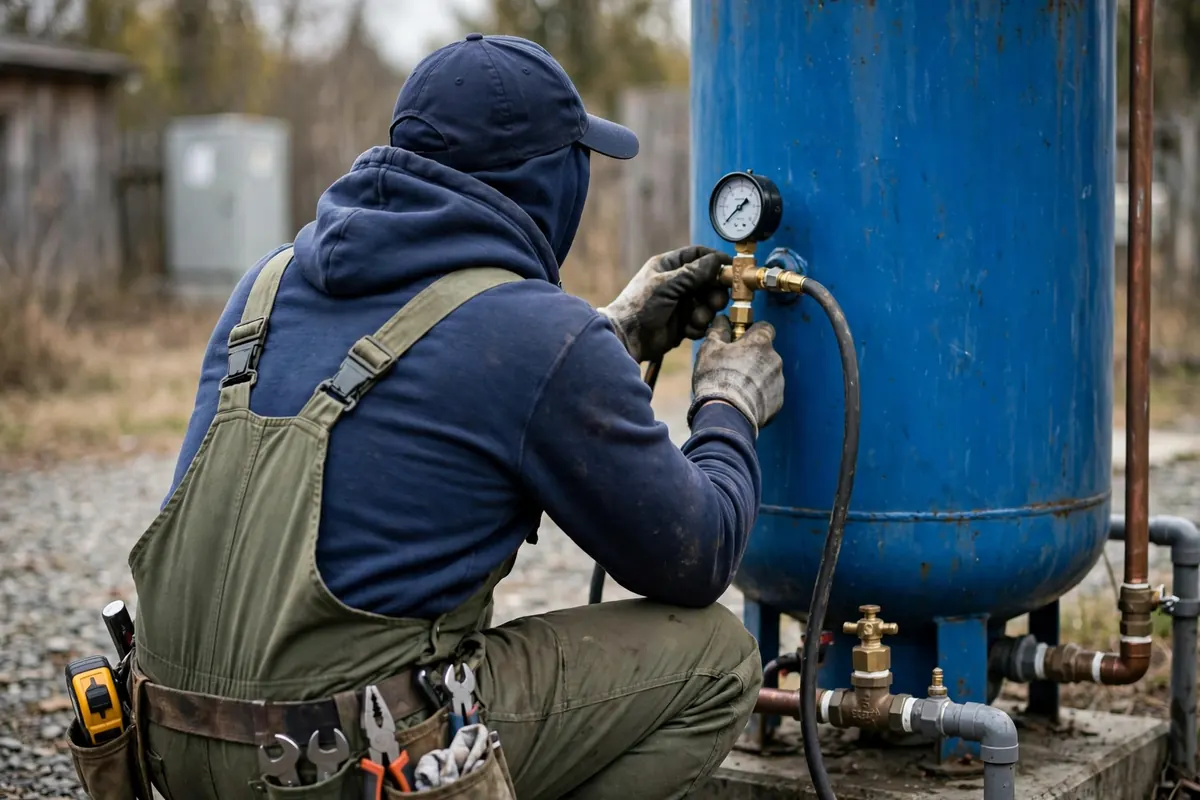
Cycling, low pressure, air in the lines, or no water at all — each points somewhere different. We ask when it started and what changed, including any recent freeze.
Reading pressure at the tank and the taps, and watching how it holds between pump cycles.
Testing the pump’s electrical draw and the controls that switch it.
Checking and setting the air charge in a pressure tank so it holds pressure properly.
Protecting exposed well-house piping and pump equipment from freezing.
Testing well water for hardness, iron, and sediment when the water itself needs treatment.
Lifting and setting pump equipment safely, without damaging the drop pipe or wiring.
These are illustrative examples of the kinds of jobs this service covers, not records of specific completed jobs.
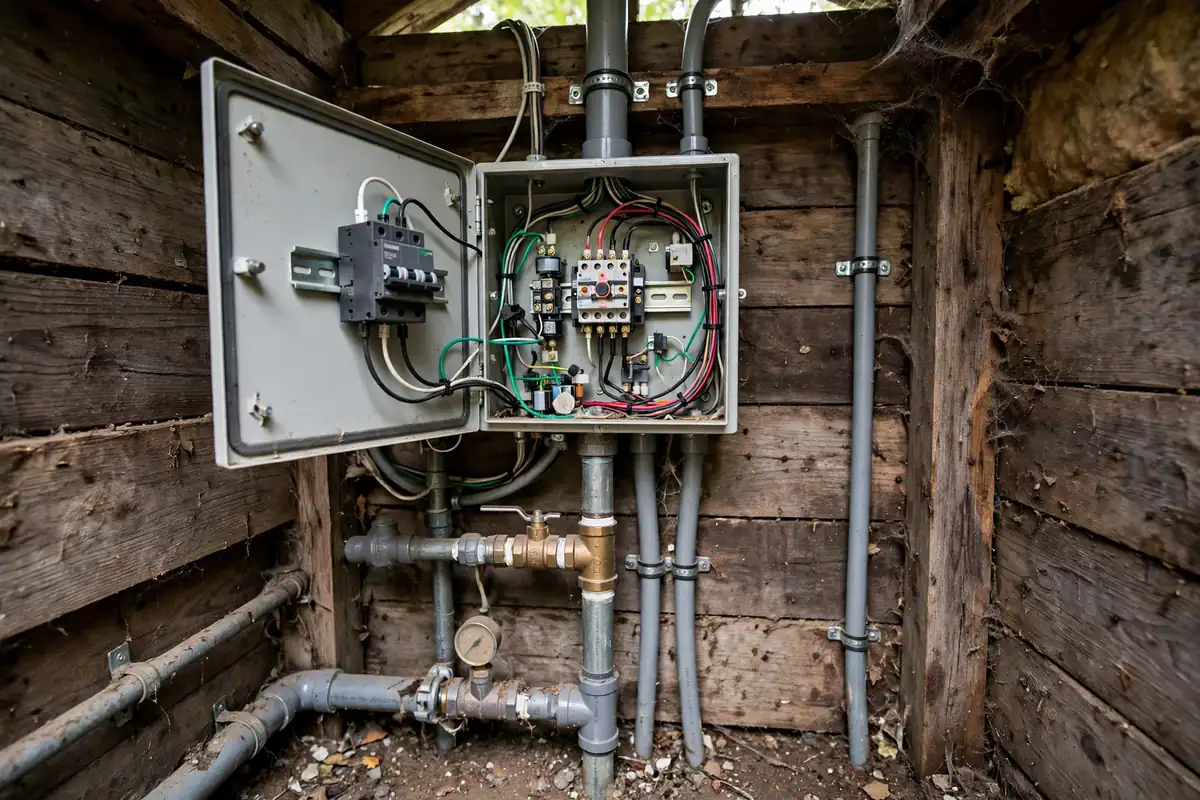
A pump in a well house can cycle on and off every few seconds, loud enough to hear through the wall, while the pressure at the taps surges and falls with every cycle.
What typically happens: testing shows a waterlogged pressure tank. The tank is replaced, the air charge and switch pressures are set to match, and the pump goes back to running in long, steady cycles.
Book this service →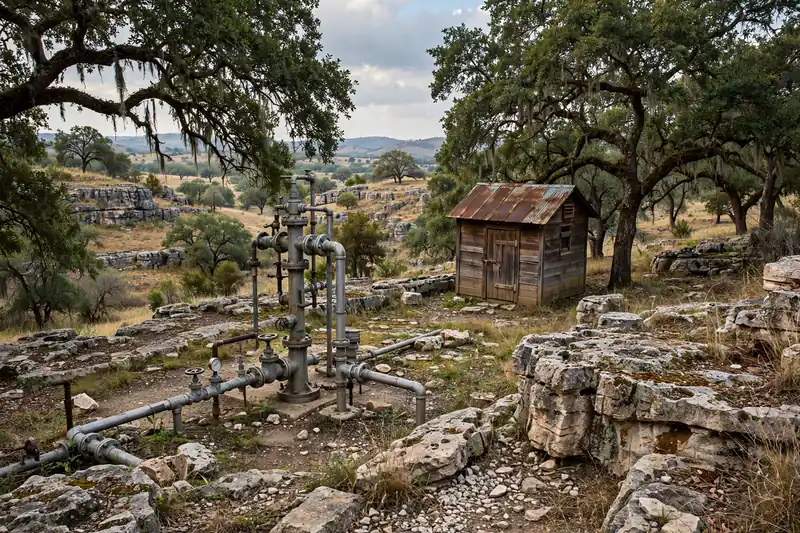
A home on a private well can have pressure so low the upstairs shower barely runs. The household assumes the well is going dry.
What typically happens: the fault turns out to be a failing pressure switch and a tank that has lost its charge — not the well. With both corrected and the pressures set, the upstairs shower runs properly again.
Book this service →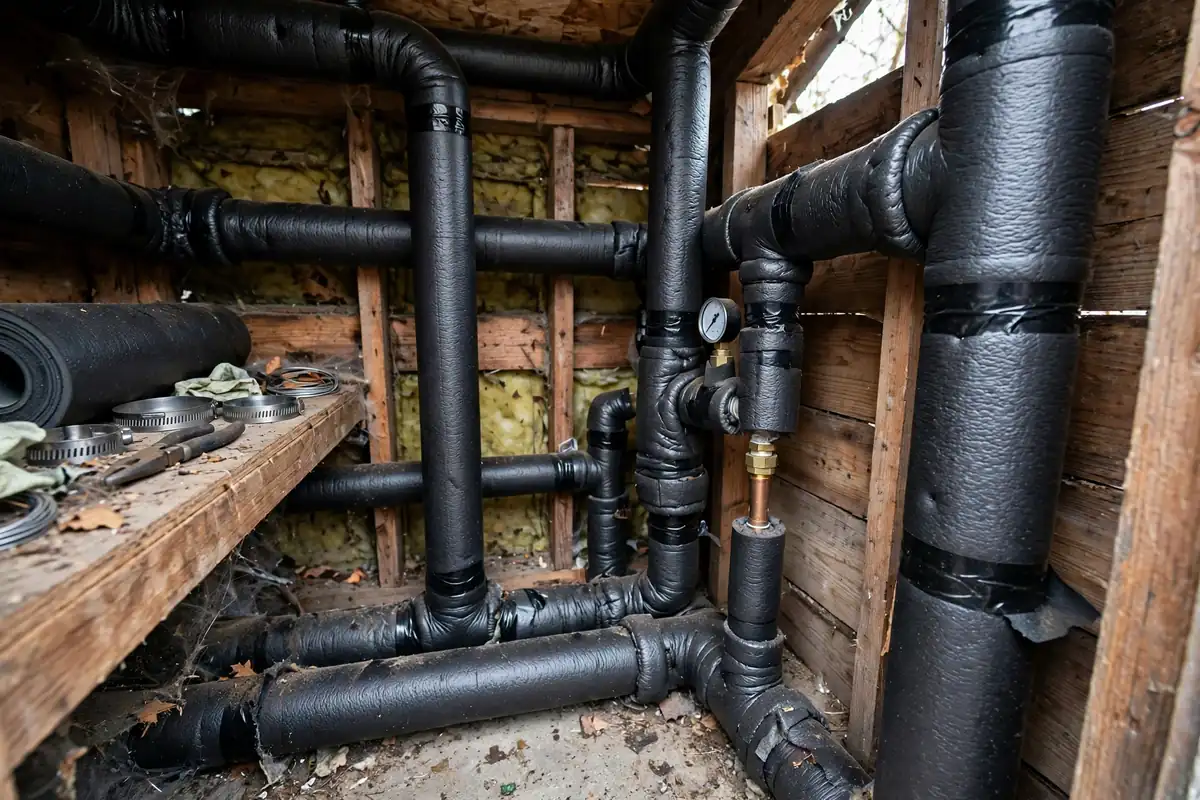
A well house with exposed piping and no protection is the kind of setup that loses water in a cold snap and only gets it back at the thaw.
What typically happens: the exposed piping is insulated, the well-house heat source is checked, and protection is fitted around the pump equipment so the next freeze does not take the water out.
Book this service →Well faults show up as pressure problems first. Here is what each symptom usually means.
Ask a pro →A waterlogged pressure tank or a faulty switch makes the pump short-cycle, and short-cycling wears a pump out fast. We test the tank and switch before touching the pump.
Low pressure can be the pump, the tank, the switch, or a pressure-reducing valve. We test in order and fix the part that is actually failing.
Air usually means the pump is drawing air or the tank has lost its charge. We trace it to the tank, the pump, or the well itself — and say plainly when it is a driller’s problem.
We work through power, the switch, the controls, and the pump in order. If the fault is in the bore itself, we tell you it is a driller’s job and point you to one.
Lake Travis Plumbing is a Spicewood plumber with a 4.9-star rating from 16 Google reviews. The office is at 10401 E Hwy 71 Building 2, Suite 2B, Spicewood, TX 78669, and the phone is (254) 822-6941. Office hours are Monday to Friday, 9:00 AM to 5:00 PM; Saturday and Sunday are closed.
Lake Travis Plumbing holds a 4.9-star rating from 16 Google reviews. You can read what customers have said on Google, or call (254) 822-6941 during office hours to talk about your job.
The usual cause is a pressure tank that has lost its air charge or a pressure switch that is sticking. The pump then runs in short bursts instead of long, steady cycles, which wears it out. We test the tank and the switch first — the pump itself is often fine.
No. Drilling a new well is a driller’s job, regulated by the Texas Department of Licensing and Regulation. What a plumber does is the plumbing side of a well that already exists — the pump, the pressure tank, the switch, and the piping.
It depends on the parcel. Burnet County parcels fall under the Central Texas Groundwater Conservation District, and Travis County parcels under the Southwestern Travis County Groundwater Conservation District. Registration depends on the parcel, so we do not guess — the district for your address is the one to ask.
Insulate exposed piping, make sure the well house itself is protected, and check any heat source in the well house before the cold arrives. Exposed pump equipment freezes early in a Hill Country cold snap. We check well houses and fit protection where it is missing.
If your pump is cycling, your pressure is swinging, or your well house needs freeze protection, call (254) 822-6941 during office hours, Monday to Friday, 9:00 AM to 5:00 PM.
Call (254) 822-6941 →Call (254) 822-6941 for plumbing in Spicewood, Texas. We answer the phone during office hours, Monday to Friday, 9:00 AM to 5:00 PM, and talk through the job before we book a visit.