Tank water heaters — repair, replacement, and sizing

Tank Water Heater Installation in Spicewood, Texas

A tank water heater is the quiet workhorse of most Spicewood homes — until the morning the shower runs cold or a damp patch appears under the tank. We handle water heater installation in Spicewood — repairing tank heaters when a repair makes sense, and replacing them when the tank itself has failed, sizing the new unit to the household and the water it will heat. Gas, propane, and electric units, on well water or a community supply.

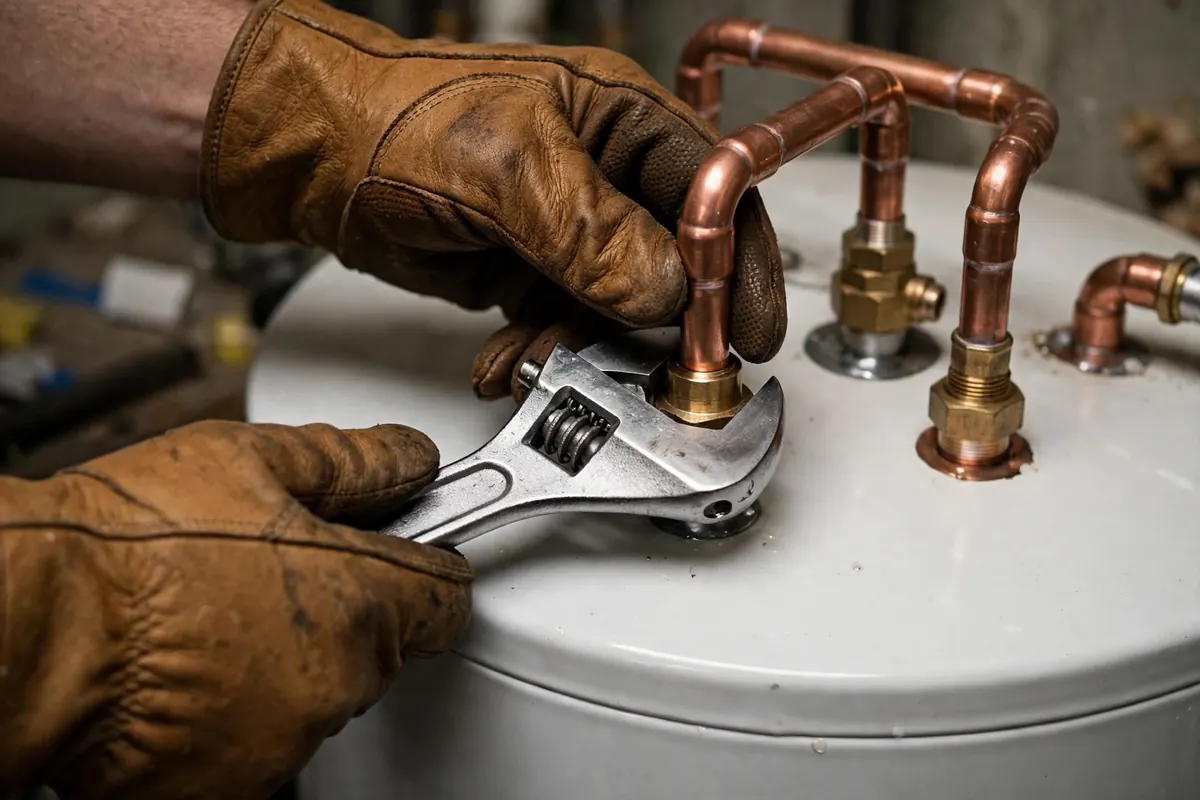
Water heater installation in Spicewood: plumber connecting copper supply lines to a new tank water heater
Careful work. Honest options.
About this service

Tank Water Heater Installation in Spicewood, Texas

Installing a tank water heater means removing the old unit, setting the new tank level, connecting the cold inlet and hot outlet, tying in the gas line or electric circuit for the heater — a heater tie-in, not a standalone gas-line service — and testing the temperature and pressure relief valve before the job is finished. We size by the people in the house and the fixtures they use, not by whatever is on the shelf — a couple in a two-bedroom home and a family of five with a soaking tub do not need the same tank.

Spicewood water shapes the decision. Hard water leaves sediment in the bottom of a tank, and sediment is what makes a heater rumble and pop, heats slowly, and wears a tank out early. That is why an annual flush matters here, and why a hardness reading and a softener conversation often belong in the same visit as a replacement. If your heater is on well water, tell us — it changes how we set the job up. For more on the warning signs, see our post on when to replace your water heater.

  • ✓ Repair vs. replace, decided honestly
  • ✓ Sized to your household and fixtures
  • ✓ Annual flush to fight sediment
  • ✓ Old tank hauled away
What's included

What Our Tank Water Heater Installation Includes

Every tank job covers the essentials below. What changes from house to house is the size of the unit, the fuel, and what the water in that home needs.

01
✓

New Unit, Sized to the Household

The tank itself, chosen for the number of people, bathrooms, and large fixtures in the home. Larger Hill Country homes with soaking tubs and multi-head showers need more stored hot water than a standard tank holds, and we say so before the old unit comes out.

02
✓

Removal and Haul-Away

The old tank comes out and goes with us, along with the packaging from the new one. You are not left with a heavy appliance in the driveway or a disposal run to arrange.

03
✓

New Supply Lines and Fittings

Flexible connectors, nipples, and shutoff valves that have served for years get replaced with the new tank. A new heater connected to a corroded old valve is a leak waiting for a date.

04
✓

T&P Valve and Discharge Line

A new temperature and pressure relief valve goes on every install, with the discharge line routed to a safe drain point. It is the safety device on the tank, and it is never reused from the old unit.

05
✓

Drain Pan and Expansion Control

The tank sits in a new drain pan, and where the system is closed — for example, where a pressure-reducing valve is fitted — we fit expansion control so pressure swings do not shorten the new tank’s life.

06
✓

Gas or Electric Hookup and Testing

Gas and propane units get new connectors and a leak check on every joint. Electric units get their elements and wiring checked. We fill the tank, bleed the air from the hot side, and bring it up to temperature before we leave.

How it works

How Our Tank Water Heater Work Goes

We ask how many people live in the home, what fuel the current unit uses, where it sits, and what it is doing wrong. That tells us whether a repair is worth trying or a replacement is the honest answer.

On site we check the tank, the connections, the shutoff, and the drain pan, and we test the parts that fail most often. A leaking tank cannot be repaired — once the steel itself weeps, replacement is the only fix — and we say that plainly.

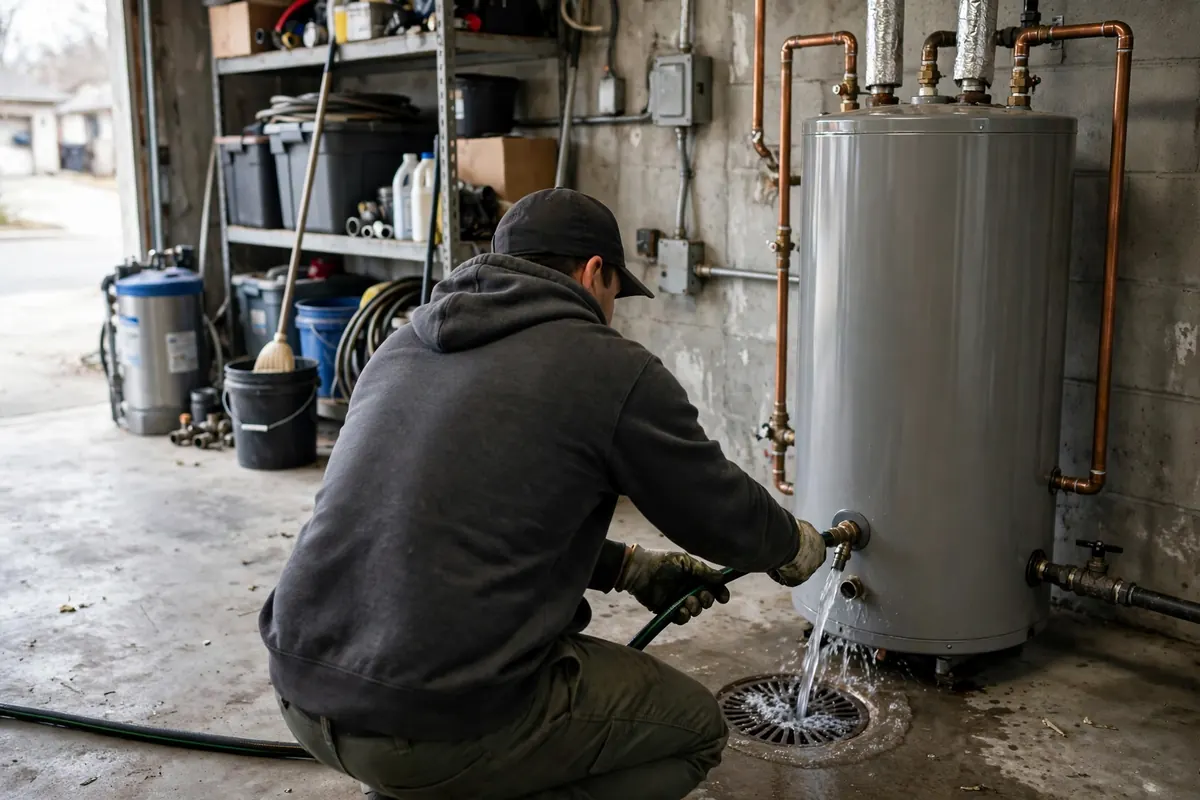
We shut off the fuel and the cold inlet, drain the tank through a hose to a safe drain, and disconnect the old supply lines and flue. While everything is exposed we check the shutoff valve and the pan.

The new unit goes in level, the T&P valve and discharge line are fitted, and the supply lines and fuel connection are made up. We check every joint as we go, not at the end.

We fill the tank, bleed the air, bring it to temperature, and check for leaks at every connection. Then we show you the shutoff, the T&P discharge, and the model and serial details for your records.

Water heater installation in Spicewood: technician flushing a tank water heater with a hose to a floor drain
STEP 01Talk It Through

We ask how many people live in the home, what fuel the current unit uses, where it sits, and what it is doing wrong. That tells us whether a repair is worth trying or a replacement is the honest answer.

Tools & methods

Tools and Methods We Bring to the Job

01
✓

Pipe wrench and press tool

Breaking loose old unions and joining pipe without a flame where a torch would be a risk in a tight closet.

02
✓

Hose and drain setup

Draining a tank cleanly to a safe drain point, so a garage or utility room stays dry while the old unit comes out.

03
✓

Combustible gas detector

Checking every gas and propane joint on a new install, with a bubble test to confirm what the detector finds.

04
✓

Multimeter and element tester

Testing elements, thermostats, and wiring on electric units before deciding whether a part or a whole tank is the fix.

05
✓

Sediment flush kit

Flushing a tank to clear the sediment that causes rumbling and slow recovery, and checking what comes out to judge the tank’s condition.

06
✓

Water hardness test kit

Reading hardness at the tap so a replacement is sized and protected for the water the home actually has, not the water the next street over has.

Examples of the kind of work

Examples of the kind of work.

These are illustrative examples of the kinds of jobs this service covers, not records of specific completed jobs.

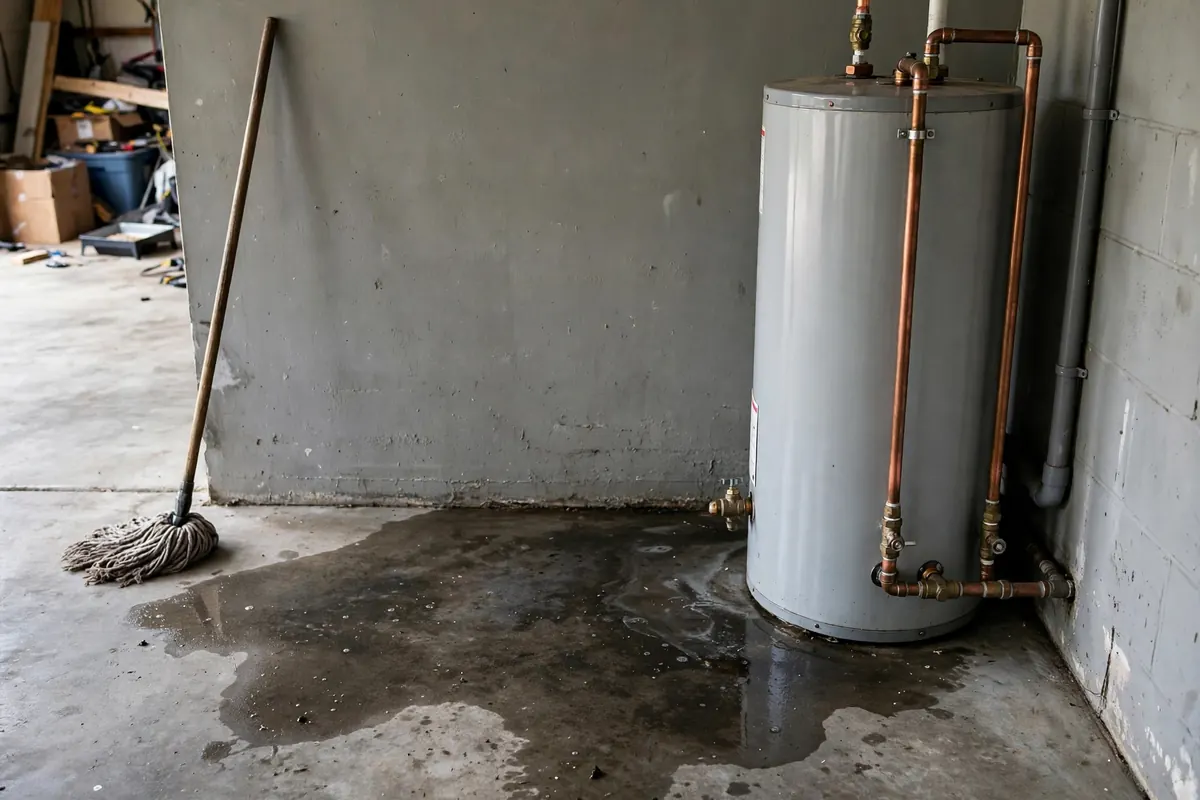
Damp floor beside the base of a water heater in a garage
Water Heater Installation

A Weeping Tank in a Garage

A tank in a garage can begin weeping from the base seam, leaving a damp patch on the floor that comes back every morning. Storage boxes get moved away from the wall and the floor gets mopped daily.

What typically happens: the old unit is drained and removed, a new tank is set on a fresh drain pan, the supply lines and fuel connector are replaced, and a new T&P discharge line is routed.

Book this service →
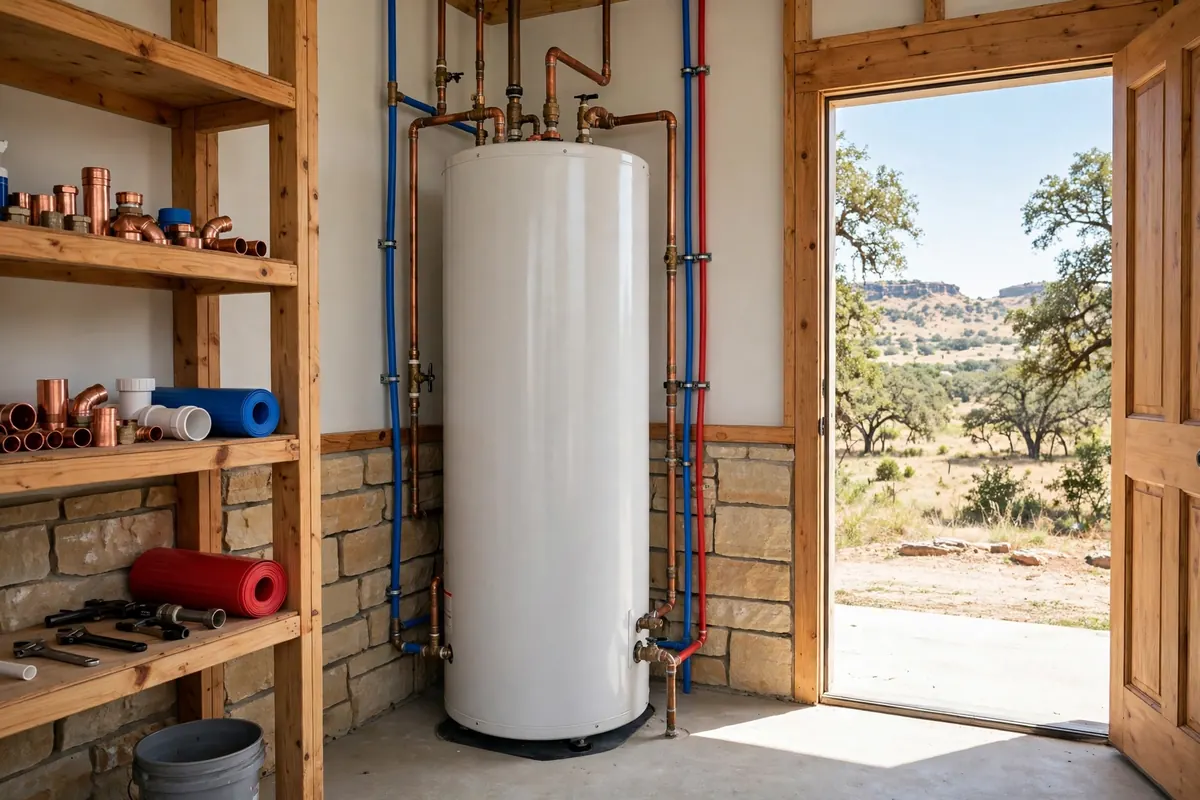
Large tank water heater in a spacious utility closet of a Hill Country home
Water Heater Installation

A Second Tank for a Growing Household

A family can outgrow a single tank: the third shower of the morning runs cold, and the soaking tub never fills hot. The tank itself is sound — it is simply too small for the house.

What typically happens: the options — a larger tank, or a tankless unit — are talked through, and a larger tank sized to the household and its fixtures is fitted, with new supply lines and a fresh drain pan.

Book this service →
Close view of sediment and an anode rod removed from a tank water heater
Water Heater Installation

A Rumbling Tank That Recovers Slowly

A tank can rumble and pop every time it fires, and recovery between showers grows slow. The noise points to sediment baked onto the bottom of the tank.

What typically happens: the tank is flushed and the anode rod and the tank's condition are checked. With the tank still sound, a flush and a new anode rod buy more years, and a yearly flush becomes part of the plan for that home.

Book this service →
Problems we solve

Tank Water Heater Problems We Solve in Spicewood

Most tank calls fall into a few patterns. Here is what we see, and how we decide between a repair and a replacement.

Ask a pro →
01

Tank leaking from the bottom or the seam

A tank that leaks from its own steel cannot be repaired. We shut the unit down, drain it, and fit a new tank with a fresh drain pan and new supply lines.

↗
02

Rusty or metallic hot water

We check the anode rod and the tank’s condition. If the tank is sound, a new anode rod can buy years. If the steel is going, we talk through replacement and sizing.

↗
03

Popping, rumbling, or banging sounds

Sediment in the bottom of the tank is the usual cause. We flush the tank and check its age and condition, then advise whether a flush or a replacement is the better money.

↗
04

No hot water, or hot water that runs out fast

We test first. A failed element, thermostat, pilot, or ignition part is a repair. If the tank is undersized for the household, we talk through a larger tank or a tankless unit.

↗
Proof you can check

Proof You Can Check

Lake Travis Plumbing is a Spicewood plumber with a 4.9-star rating from 16 Google reviews. The office is at 10401 E Hwy 71 Building 2, Suite 2B, Spicewood, TX 78669, and the phone is (254) 822-6941. Office hours are Monday to Friday, 9:00 AM to 5:00 PM; Saturday and Sunday are closed.

Customer reviews

Rated 4.9 Stars by Spicewood Customers

★★★★★ 4.9 out of 5

Lake Travis Plumbing holds a 4.9-star rating from 16 Google reviews. You can read what customers have said on Google, or call (254) 822-6941 during office hours to talk about your job.

Read our Google reviews →

Good questions

Water Heater Questions Spicewood Homeowners Ask

(254) 822-6941 →

It comes down to what has failed. A faulty element, thermostat, pilot assembly, or ignition part can usually be repaired. A tank that leaks from the bottom or the seam, or one with rusty hot water from steel that is breaking down inside, cannot be repaired — the tank itself has to be replaced. Age matters too: a tank near the end of its expected life with a second fault is usually better replaced than repaired again.

Count the people and the fixtures. A one- or two-person household usually manages with a smaller tank; a family with several bathrooms, a soaking tub, or a multi-head shower needs a larger one. Larger Hill Country homes often need more stored hot water than a standard tank holds. We size from the household, not from a chart alone.

In Spicewood the usual cause is sediment. Hard water leaves mineral sediment in the bottom of the tank, and when the burner or element heats through that layer, water trapped underneath turns to steam and pops. An annual flush clears sediment before it builds up, and a softener or filtration setup reduces how fast it returns.

Yes — sediment and scale are the main way hard water wears a tank out. Sediment insulates the bottom of the tank, makes the unit work harder, and speeds corrosion. A yearly flush helps, and treating the water at the entry to the home helps more. We test hardness at the tap before recommending anything.

Ready when you are

Get Tank Water Heater Help in Spicewood, Texas

Cold showers and damp floors do not fix themselves. Call (254) 822-6941 during office hours, Monday to Friday, 9:00 AM to 5:00 PM, and tell us what your tank is doing — we will talk through repair or replacement honestly.

Call (254) 822-6941 →
Request an appointment

Call Lake Travis Plumbing

Call (254) 822-6941 for plumbing in Spicewood, Texas. We answer the phone during office hours, Monday to Friday, 9:00 AM to 5:00 PM, and talk through the job before we book a visit.

Call during office hours(254) 822-6941Contact usSend a message
Office hoursMon–Fri 9:00 AM–5:00 PM · Sat–Sun Closed
Request received - our team will be in touch shortly.
↗
Emergency plumbingCall now