Hardness Test at Your Tap
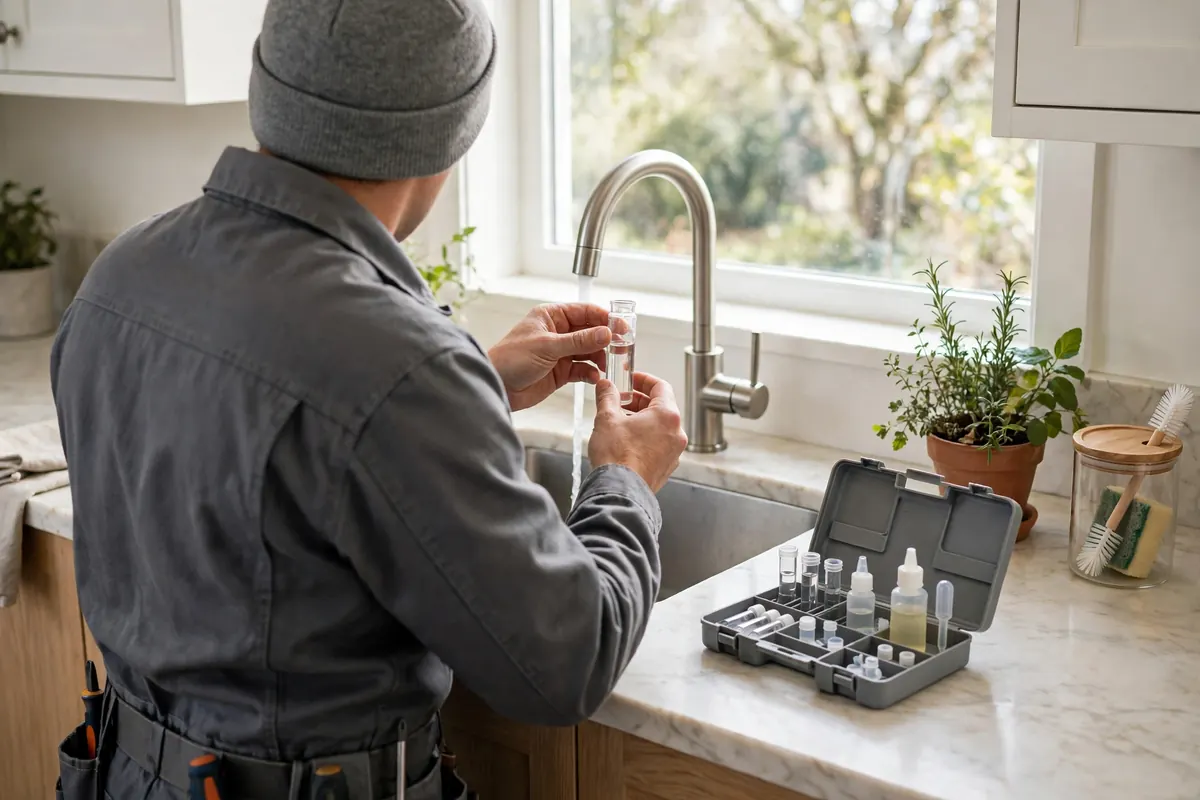
We test the water at the home before sizing anything. The reading, the water source, and the household’s usage set the size — not a standard package.
Spicewood water is hard — that is the fact behind the scale on your faucets, the spots on your dishes, and the sediment rumbling in your water heater. For water softener installation in Spicewood, we install and service water softeners and whole-home filtration, sized to a hardness reading taken at your own tap, because hardness varies from street to street and a system sized to a neighbour’s water is a guess.
A water softener removes the minerals that make water hard, using resin and salt to exchange hardness out of the water before it reaches your taps. Whole-home filtration sits alongside it, catching sediment and improving taste and clarity. The two do different jobs, and most Spicewood homes that treat their water need both — softening for scale, filtration for everything a softener does not catch.
Sizing starts at your tap. We test hardness at the home itself, because Spicewood hardness varies street to street and a number from another home — or another website — tells us nothing about yours. Homes on private wells get water testing first, since well water can carry iron and sediment a softener alone will not fix. Read more about the signs in our post on hard water in Spicewood.
Softening and filtration are fitted as one system, matched to the water in your home.
We test the water at the home before sizing anything. The reading, the water source, and the household’s usage set the size — not a standard package.
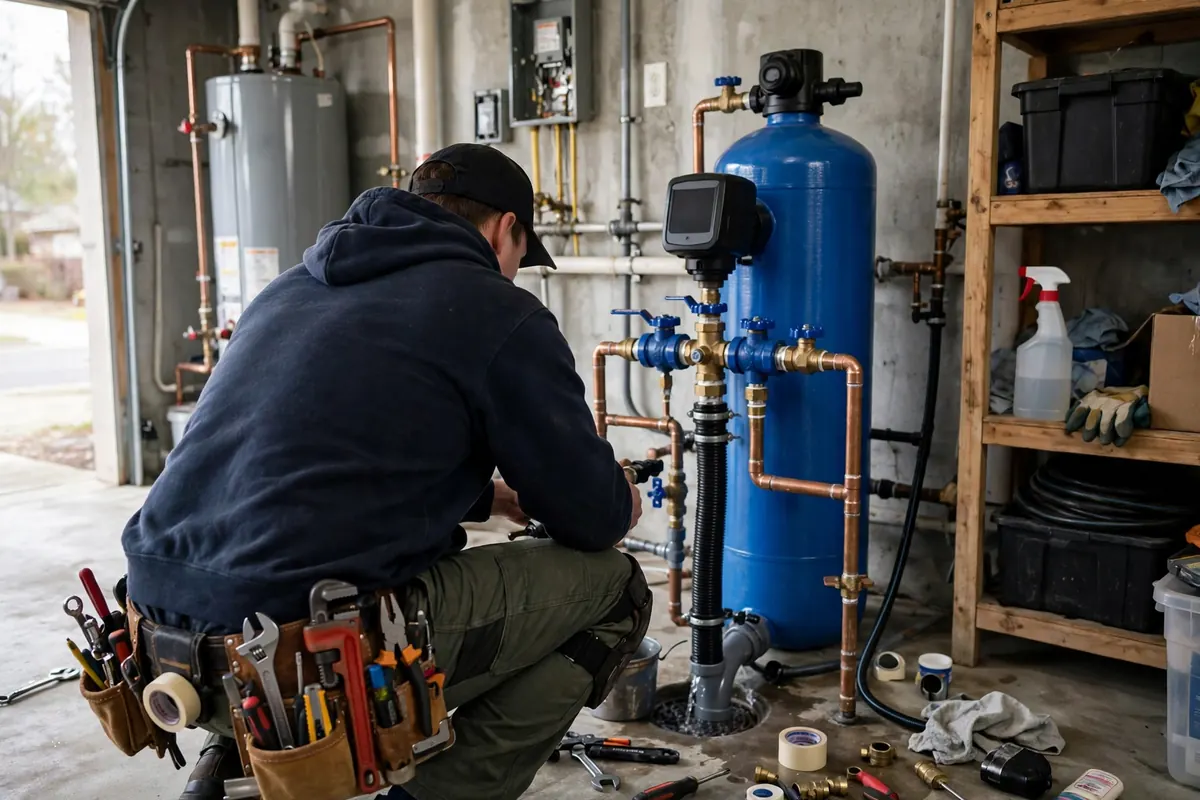
The softener is sized to the hardness reading and the home’s water use, then installed with a bypass, drain, and salt storage that make service straightforward.
A sediment filter and, where the water calls for it, carbon filtration sit ahead of the softener, catching grit and improving taste and clarity before the water is softened.
Well water with iron or heavy sediment needs its own stage. We test first and fit what the water actually carries — a softener alone will not fix iron staining.
Ultraviolet treatment deals with microbiological concerns in well water. It is a separate tool from softening and filtration, fitted only where testing shows it is needed.
We test hardness at the tap and, for well water, test for iron, sediment, and the other things a softener does not treat. No system is sized before the water is known.
Softening, filtration, iron removal, and UV each treat different things. We lay out what each one does — and what it does not do — so you are choosing with the facts.
The softener and filters are sized to the reading and the household, then placed where they can be serviced, with a bypass and a proper drain.
We fit the system, check for leaks, run water through it, and test the treated water at the tap so the result is measured.
We leave you with the salt and filter routine for your home’s water, and the signs — spots returning, pressure dropping — that mean it is time to call.
We test hardness at the tap and, for well water, test for iron, sediment, and the other things a softener does not treat. No system is sized before the water is known.
Reading hardness at the tap, so the softener is sized to the home’s own water.
Testing well water for what a softener will not fix, before anything is sold.
Checking pressure before and after the system, so filtration never starves the house of flow.
Fitting systems with a bypass and a proper drain, so service does not shut the house off.
Servicing softener resin and filter media, and replacing what is spent.
Checking ultraviolet lamps and sleeves where UV treatment is part of the system.
These are illustrative examples of the kinds of jobs this service covers, not records of specific completed jobs.
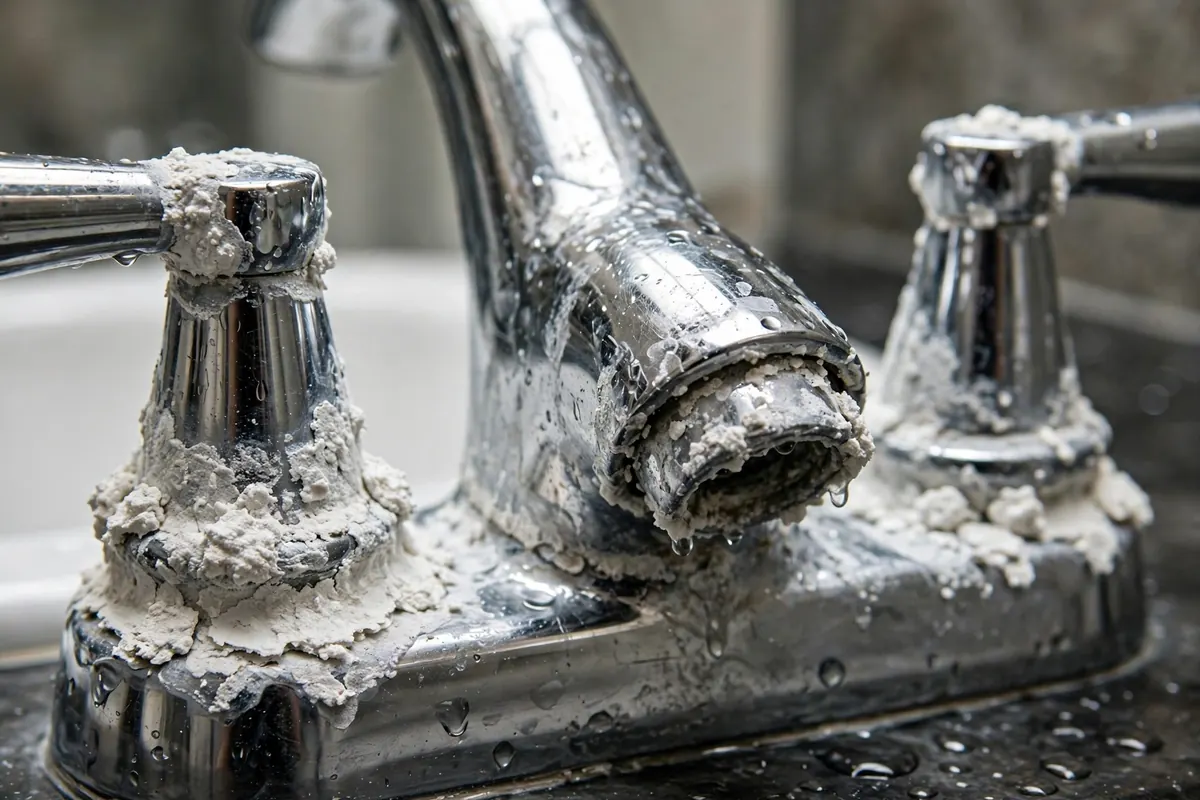
A home can have scale crusting the faucets, spots on every glass, and a water heater that has begun to rumble. The water is hard, and nothing in the house is treating it.
What typically happens: hardness is tested at the tap, a softener sized to the reading is fitted with whole-home filtration ahead of it, and a salt and filter routine is set.
Book this service →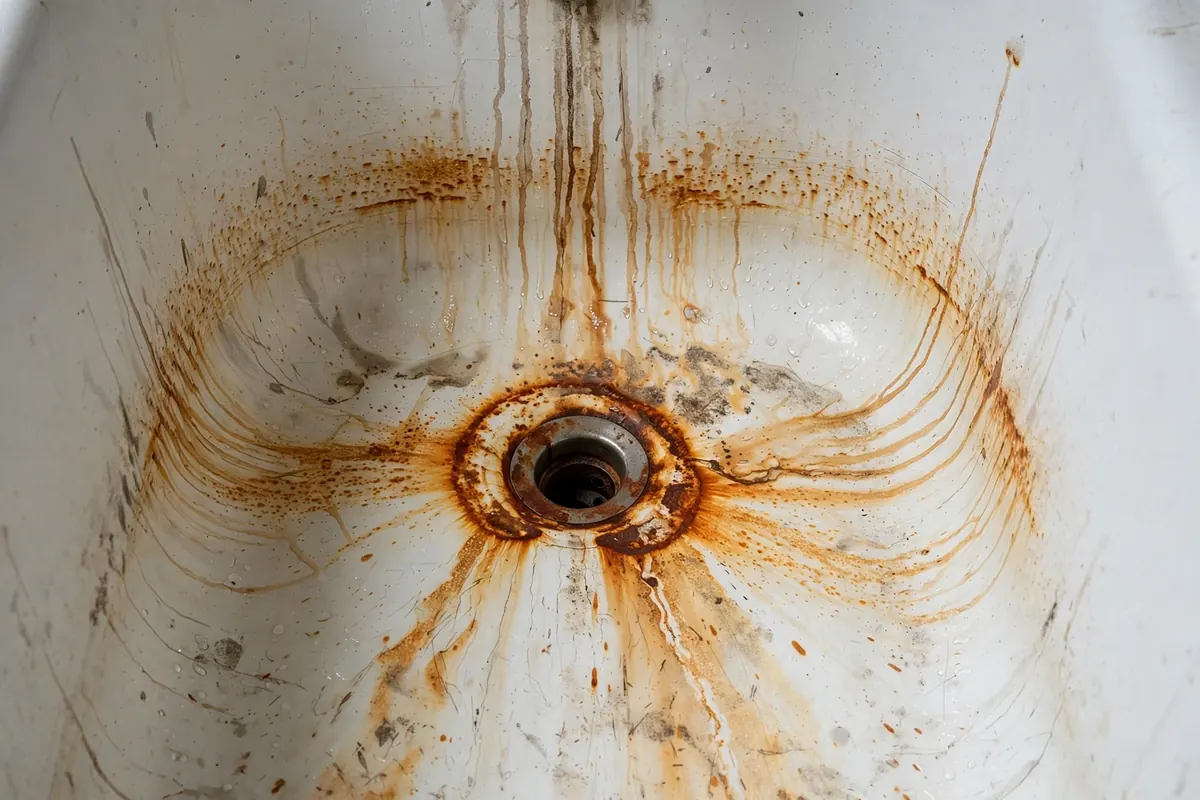
A well-water home can have rust-coloured staining in sinks and tubs. A softener alone would not fix it — the water carries iron the softener was never designed to catch.
What typically happens: testing shows iron in the well water, so iron treatment is fitted ahead of the softener, with filtration to match, and the softener can then do its own job properly.
Book this service →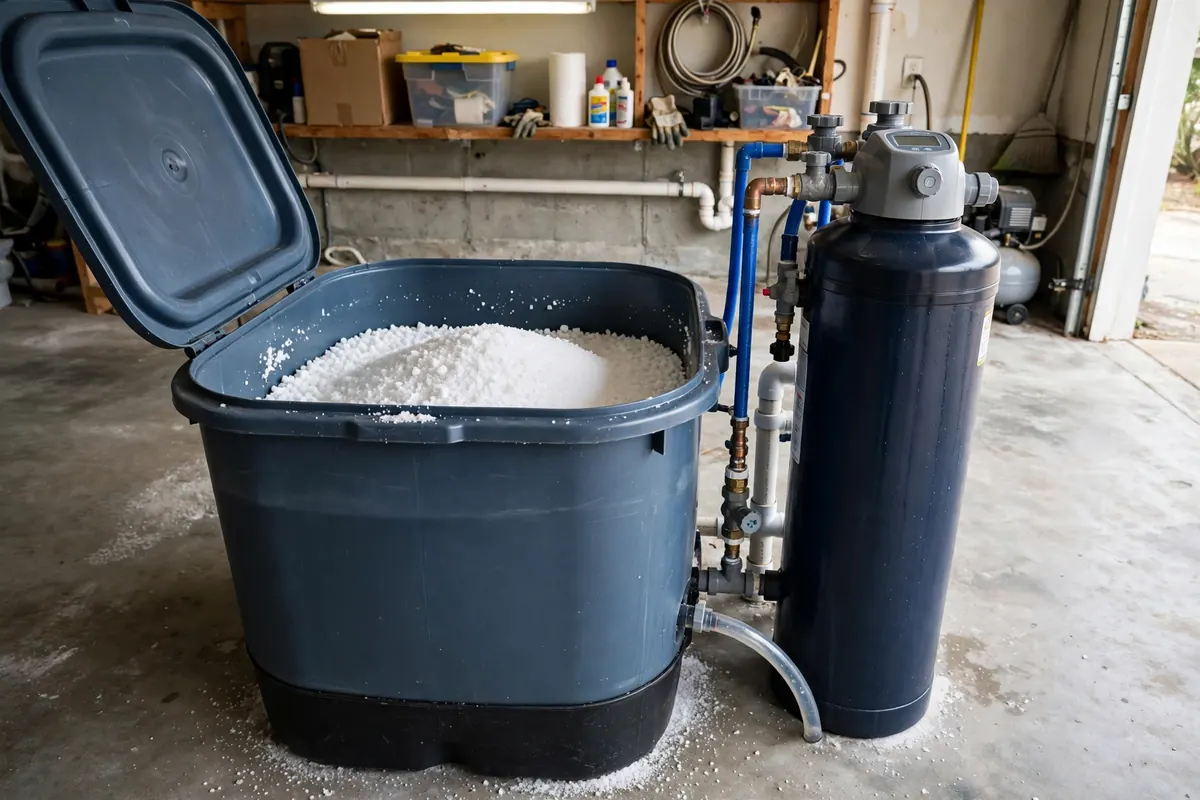
A household on a private well can want softer water and be quoted a softener over the phone with no test at all.
What typically happens: the well water is tested first, and sediment and hardness found together are treated together, with a system sized to the readings at that tap — not to a neighbour's.
Book this service →Hard water shows up in small ways first. Here is what we see, and what fixes each one.
Ask a pro →Hardness leaves mineral scale wherever water dries. A softener sized to your tap’s reading stops new scale forming; filtration keeps grit out of the system.
Spots are hardness drying on the surface. Softened water rinses clean, and a whole-home filter keeps sediment from adding its own marks.
Sediment from hard water settles in the tank, makes it rumble, and wears it out early. Softening slows the sediment; an annual flush clears what still settles.
Hard water leaves mineral residue on skin and fabric. Homeowners often notice the difference first in the shower and the wash — modest claims, but real ones.
Lake Travis Plumbing is a Spicewood plumber with a 4.9-star rating from 16 Google reviews. The office is at 10401 E Hwy 71 Building 2, Suite 2B, Spicewood, TX 78669, and the phone is (254) 822-6941. Office hours are Monday to Friday, 9:00 AM to 5:00 PM; Saturday and Sunday are closed.
Lake Travis Plumbing holds a 4.9-star rating from 16 Google reviews. You can read what customers have said on Google, or call (254) 822-6941 during office hours to talk about your job.
By testing it at your own tap. Hardness varies from street to street in Spicewood, so a reading from another home — or a number published online — does not describe your water. We test at the tap and size from that reading.
A softener removes hardness minerals. A whole-home filter catches sediment and improves taste and clarity. An iron filter removes iron that stains fixtures. UV treatment addresses microbiological concerns in well water. Each treats something different, and none of them does the others’ job.
Yes — testing comes first for well water. A well can carry iron, sediment, and other things a softener alone will not fix, and the treatment has to match what the water actually carries. We test before sizing anything.
Salt top-ups, periodic media checks, and filter changes. How often depends on the home’s water use and hardness. We set the routine from your readings and show you the signs — spots returning or pressure dropping — that mean it is time for a visit.
If scale, spots, or a rumbling heater are telling you the water is hard, call (254) 822-6941 during office hours, Monday to Friday, 9:00 AM to 5:00 PM, and start with a hardness test at your own tap.
Call (254) 822-6941 →Call (254) 822-6941 for plumbing in Spicewood, Texas. We answer the phone during office hours, Monday to Friday, 9:00 AM to 5:00 PM, and talk through the job before we book a visit.